
innerU Mindfulness Ocean Adventure
Lesson 4 – Listening Like an Orca
| Slide | Content |
|---|---|
Slide 1  |
Learning Objectives:The objective of this lesson is for students to learn mindful listening and explore the benefits of listening like orcas. By the end of this lesson, students will:
|
Slide 2 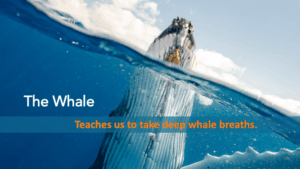 |
Review – Breathing Like Whales (5 minutes) Script for Teachers: Ask the students: “Did you practice taking slow deep breaths like a whale this week on your own?” If so, you can ask what they practiced, why they practiced, whether it helped, and if so, how. What do you remember from last week? GUIDE PRACTICE: Breathing like a whale.
After 10 breaths ask students to gently open their eyes. Question: What did you notice inside of you as you took deep whale breaths today. (Reflect student responses) |
Slide 3 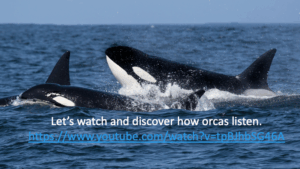 |
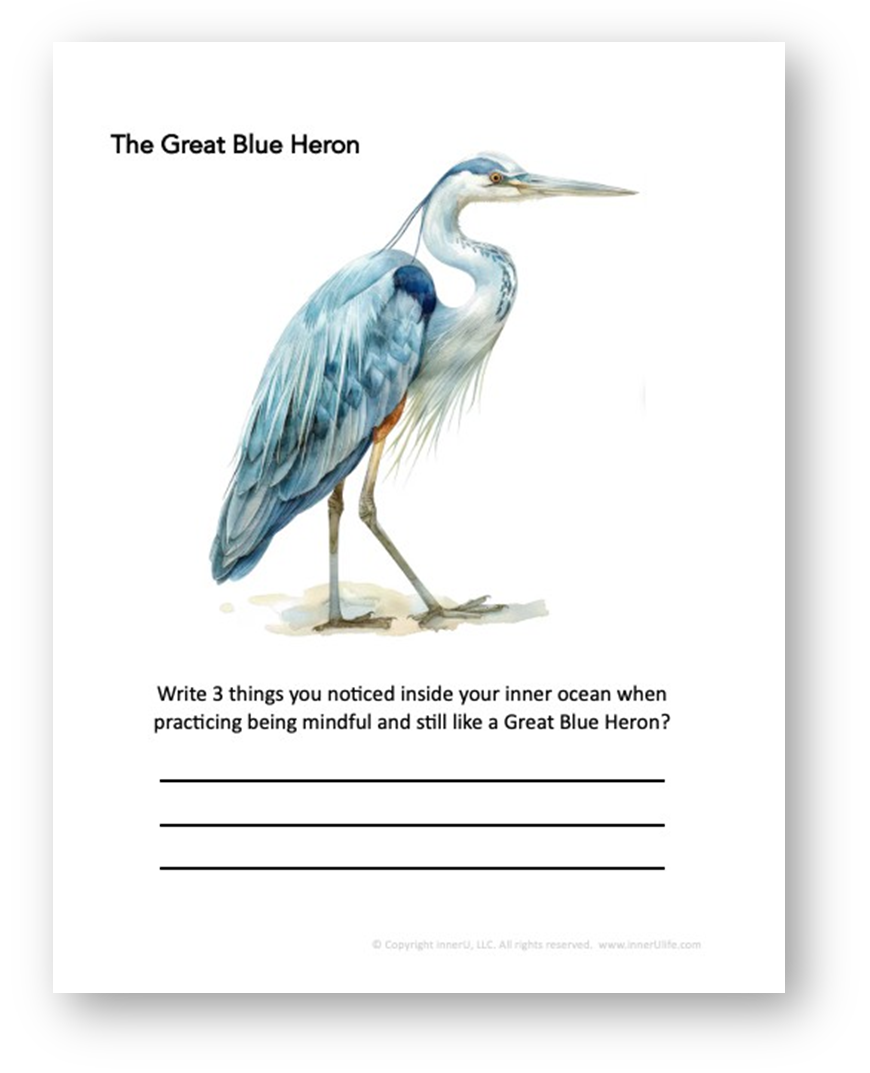
NEW ANIMAL TEACHER: THE ORCA (10 MINS) Magic Phrase: Listen like an orca. Let’s practice listening mindfully like orcas by listening to the sound of orcas communicating! Let’s begin by sitting up straight and still like the Great Blue Heron to help us pay attention. Sit straight and tall with your hands on your knees or in your lap. (Play orca sounds for 1 minute.) https://www.youtube.com/watch?v=tpBJhbSG46A Great job! You’ve just practiced mindful listening. |
Slide 4 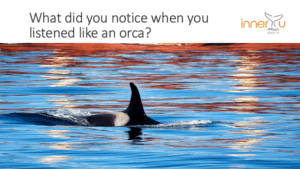 |
What did you notice about the sound you heard? (Solicit responses from various students with an attitude of curiosity). Encourage Students: I see all the different things you all noticed–very good! |
Slide 5  |
MAKE THE CONNECTION (3 mins): What can we learn from orcas? Noise pollution from ships, military sonar, and boats makes it loud in the ocean and creates problems for dolphins and whales. It makes it hard for them to hear each other. Now think about when we’re trying to communicate and it’s too noisy. Is it more difficult to listen when there is a lot of noise or when everyone is talking at once? (Have children raise hands if they agree.) Is it hard to hear someone else when we’re interrupting and talking over them? (Have children raise hands if they agree.) Yes! We can learn that it’s hard to hear when there’s a lot of noise or when we’re not quiet and listening. |
Slide 6 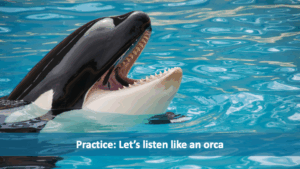 |
PRACTICE MINDFUL LISTENING Keeping your eyes open, let’s explore what happens when we practice mindful listening. First, invite the Great Blue Heron to teach you to be still. I will ring the bell. Raise your hand when you no longer hear it. (Ring mindful bell and let students listen for the duration of the bell sound.) Great job! Let’s do that again. This time I am going to ask you to do this with your eyes closed. And notice if there is a difference when you listen with your eyes closed. (Ring mindful bell again.) |
Slide 7  |
Question: What did you experience when listening with your eyes closed versus with your eyes open? Our last fun experiment is that I will invite you to be still and quiet to listen mindfully like orcas and discover a sound that is the farthest away from you. (Ring bell to indicate the beginning and end of mindful listening practice). Question: |
CLOSINGCongratulations for practicing mindful listening! Now that you’ve learned how to LISTEN like an orca, I invite you to practice mindful listening this week in class or at home. To end our time together, let’s take three slow mindful whale breaths. |
Class Presentation – (Click Image to Download)
Student Worksheet – (Click Image to Download)
Resources