innerU Mindfulness Ocean Adventure
Lesson 5 – Anchoring Like a Holdfast
| Slide | Content |
|---|---|
 |
Learning ObjectivesThe objective of this lesson is for students to begin understanding the relationship between deep breathing and creating a sense of calm and groundedness—just like a holdfast in the ocean.
|
| Slide 1 |
Hold up your fingers to show how many times you practiced mindfulness since we last met. (Provide encouraging feedback.) Last week, we learned from the orca. Ask: What did we learn from the orcas? (Answer: To listen mindfully.) |
Slide 2 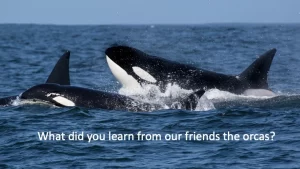 |
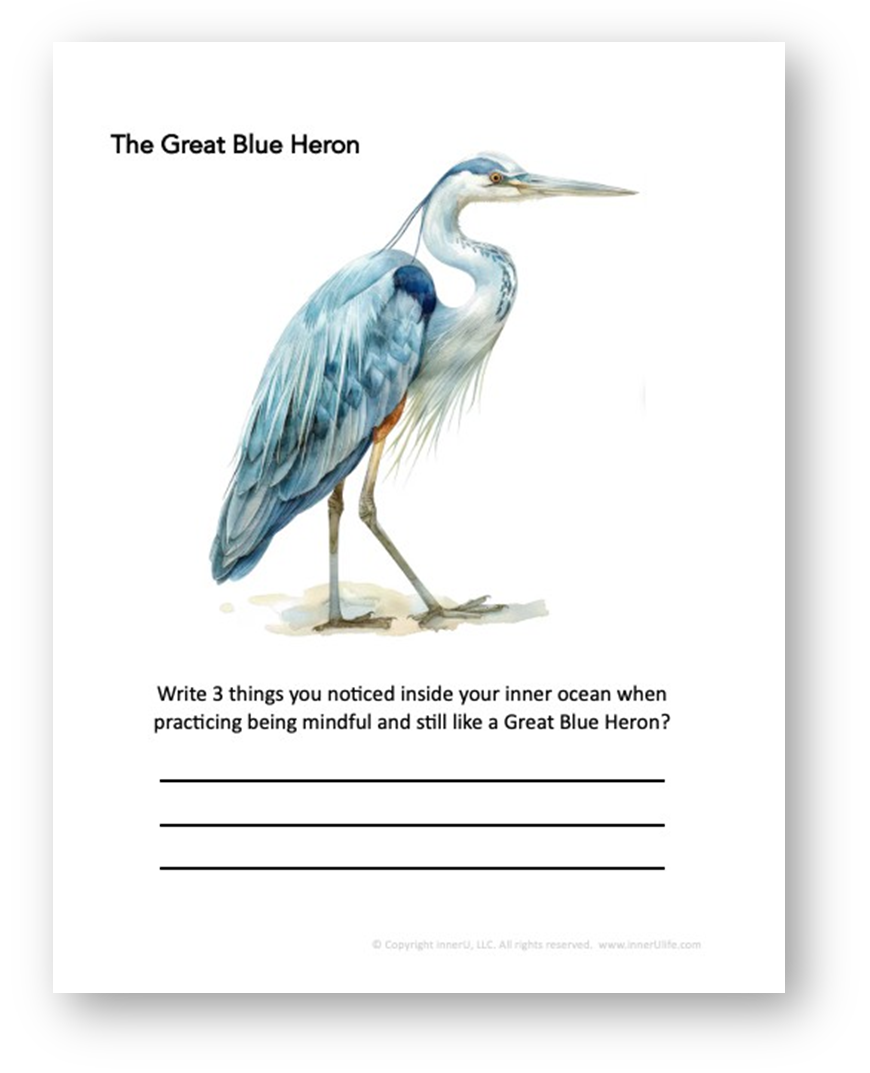
Review: Listening Mindfully Like an Orca (5 minutes)Orcas taught us how to listen mindfully. Ask: What happens when there is noise pollution in the ocean? (Answer: It becomes hard for orcas to communicate—just like it’s hard for us to listen when there’s a lot of noise or when everyone is talking at once.) Let’s practice mindful listening for 2 minutes. At the sound of the bell, sit tall like a Great Blue Heron, place your hands in your lap, and gently close your eyes. Take a big whale breath and bring your attention to the sounds around you:
After another whale breath, gently open your eyes at the sound of the bell. Ask: What did you notice while practicing mindful listening? (Invite responses.) |
Slide 3 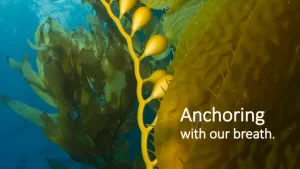 |
NEW TEACHER: KELP FOREST & HOLDFAST (5 MINS) Magic Phrase: Anchor like a holdfast We learned from our friends the whales that taking slow, deep breaths help us feel calmer. Our breath is an incredible gift—it’s always with us, wherever we go. That means we can use it as a tool to help us stay mindful and calm anytime, anywhere. So, we can always take slow, deep breath anywhere to help calm ourselves if we need it. Another teacher that can help us become calmer is kelp that live in our oceans. Today, we’ll learn from giant kelp, a special ocean seaweed that helps produce 50% of the oxygen on our planet! |
Slide 4 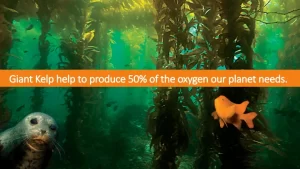 |
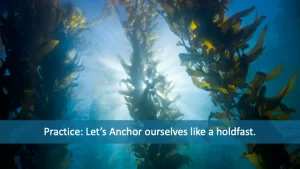
Kelp forest anchor themselves at the bottom of the ocean floor on rocky reefs with roots called holdfasts. These roots allow them to stay solidly anchored even through strong tides, currents, or storms. Let’s have fun practicing taking deep breaths and noticing what happens in your body when you do that. |
Slide 5 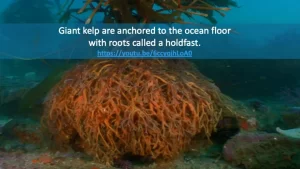 |
Practice Anchoring Watch: Kelp Forest video – https://youtu.be/6ccyqjhLoA0 Ask: Who noticed how still the holdfast was on the ocean floor? (Use thumbs up/down/sideways for responses.) Who noticed how the kelp moved above the holdfast? (Mimic the swaying motion with your arms.) Stormy Seas Sometimes we feel like the stormy sea by being too excited. Other times, we can get upset, scared, afraid, nervous, or angry. Raise your hand if you have ever experienced one of these emotions. (Ensure that students understand that we all have these emotions and that they are normal.) Watch: Stormy Seas video – https://www.youtube.com/watch?v=CwnEfv6xofk Ask or invite students to write in a journal: What is upsetting to you right now in your life? Write in your journal:
Make the Connection (1 minute)Our breath is like the holdfast—it helps us stay steady when we feel stormy inside. When your inner ocean feels rough, focus on your breath. It can help you feel grounded, calm, and strong—just like the kelp’s holdfast. |
|
Slides 6–7
|
PRACTICE: ANCHORING WITH OUR BREATH (3 MINUTES) Let’s practice being like giant kelp in the ocean, anchoring with our breath, feeling our feet on the ground, and see how it feels. Guided Movement:
(Ring bell and invite children to gently open their eyes.) |
| FUN EXPLORATION & CLOSING (2 MINS) Invite students to practice anchoring with the breath and feet throughout the week at home or school. Congratulate students and close with three mindful breaths all together. |
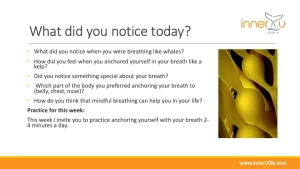
Class Presentation – (Click Image to Download)
Student Worksheet – (Click Image to Download)
Resources